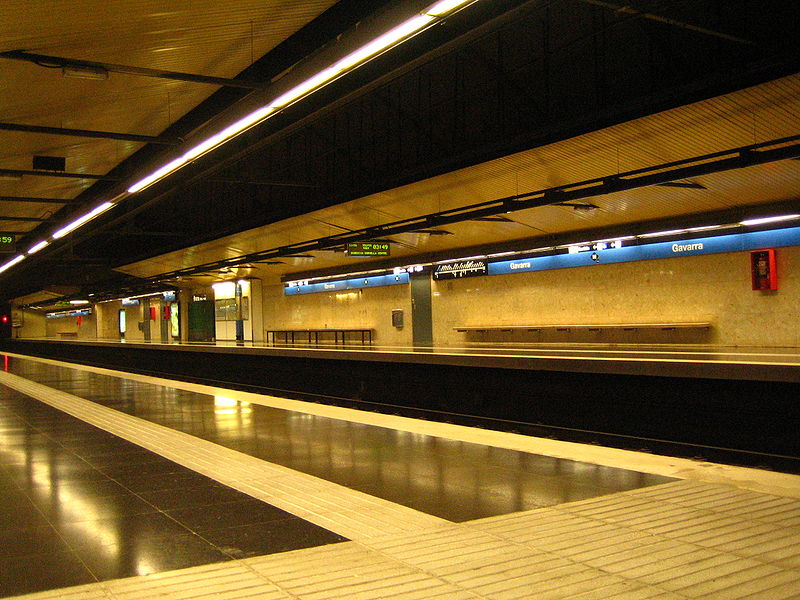
History
The Barcelona Metro was founded in 1924 with the construction of the Gran Metro between Lesseps and the Plaça de Catalunya, part of the modern Line 3. Two years later the Metro Transversal (now part of Line 1) was built between the Plaça de Catalunya and la Bordeta to link the city centre with the Plaça d'Espanya and Montjuïc, the site of the 1929 Barcelona International Exposition.
Today the network consists of ten lines managed by 2 different operators: Transports Metropolitans de Barcelona (TMB), which manages the major underground lines; and Ferrocarrils de la Generalitat de Catalunya (FGC, or Catalan Government Railways), which manages three integrated commuter lines running out into the extended metropolitan area. Fares are integrated into Autoritat del Transport Metropolità, a city-wide system that also includes local and regional buses and some regional train services. 98% of its railway tracks are underground.